
A Federal Reserve governor says AI agents moving money on their own could speed up the next bank run. Banks say some agents are already knocking on accounts.
By Joseph J. Jackson | WASHINGTON (Nov. 18, 2026)
The short version
Fed Governor Michael Barr warned Monday that AI agents moving customer money on their own could turn a bank run into something that “unfolds in minutes.”
Banks report AI agents already trying to act inside retail accounts without the bank being able to verify the customer agreed.
In the Fed’s new stability report, 87% of contacts named AI as a top risk. Debt at the seven largest AI firms is expected to top $800 billion this year.
In March 2023, Silicon Valley Bank customers pulled $42 billion in roughly 24 hours. That run took phones, group chats and panicked people hitting “transfer.”
The Federal Reserve now says the next run may not need the people.
Speaking Monday in Milan at an international conference on AI in finance, Fed Governor Michael Barr said AI agents “may accelerate deposit outflows during stress periods.”
What is an AI agent doing in my bank account?
An AI agent is software you authorize to act for you: pay bills, chase a better savings rate, move money. Barr’s point is that customers used to make those transfers themselves. An agent can watch rates and headlines all day and act the moment something looks off.
Barr said agents could “instantaneously detect yield differentials or stability signals and autonomously move funds at high speed.”
How fast could a run get?
Fast enough to beat the people whose job is to stop it. Barr warned of “runs that unfold in minutes,” moving quicker than banks can manage cash and quicker than regulators can step in.
SVB took a day. The Fed is now planning for minutes.
Is this already happening?
Partly. Barr said banks have reported AI agents trying to act in retail accounts “without the bank being able to verify authenticity, consent, and alignment with customer instructions.”
In plain words: a bot shows up, and the bank cannot confirm you sent it or that it is doing what you asked.
Why is the Fed raising this now?
The Fed’s Financial Stability Report, released Friday, Nov. 13, found 87% of the contacts it surveyed named AI as a salient risk to the financial system. They pointed to cyberattacks, complex AI-related financing and the chance of an AI bust.
Barr laid out the money behind that worry:
Debt at the seven largest AI firms is expected to exceed $800 billion before the end of 2026.
Off-the-books obligations tied to the AI build-out could reach a maximum value of more than $3 trillion, by the report’s estimate.
Big cloud companies and chipmakers hold more than $100 billion in equity stakes in AI labs and cloud start-ups, many of which are also their customers.
He also warned about Wall Street trading. If traders lean on a handful of similar AI models trained on similar data, those models can react to the same news the same way at the same time. A market full of look-alike models “that may have the same flaw,” he said, “risks failures with systemic consequences.”
FMNN mapped that money loop earlier this month: The AI Money Loop: Trillions Lost as Same Few Firms Pay Each Other.
Is anyone saying this is overblown?
Yes. Research firm eMarketer argued earlier this year that today’s AI assistants can’t move a customer’s balance to another bank on their own. A human still has to open the new account and set up the transfer.
That is true today. Barr’s warning is about where the tools are heading, and the consent problem he describes is already on bank desks.
What does the Fed want done?
No formal rule yet. Barr called for “strict authentication” and “explicit consent verification for specific actions” before agents can move money. He said developers need ways to make sure agents “follow established rules and values,” and that new technology should be thought through before it gets plugged into markets.
What does this mean for your money?
FDIC insurance still covers deposits up to $250,000 per depositor, per insured bank, per ownership category. That limit is the same whether a person or a bot pulls the money.
Read what any AI tool or app is allowed to do with your accounts before you connect it. “Move funds” is a bigger permission than “view balance.”
Florida has plenty of community banks and credit unions. A minutes-long run hits smaller institutions hardest, because they have less cash on hand to cover a rush.
SVB’s customers ran in a day and the government stepped in over a weekend. The Fed is telling us the next one might be over before anyone gets to the phone. The warning is on the record. The rules to stop it are not written yet.
Sources
Reuters via Kitco, “Fed’s Barr warns on AI risks to financial system,” Nov. 16, 2026
Reuters via Yahoo Finance, on Silicon Valley Bank’s $42 billion in 24 hours
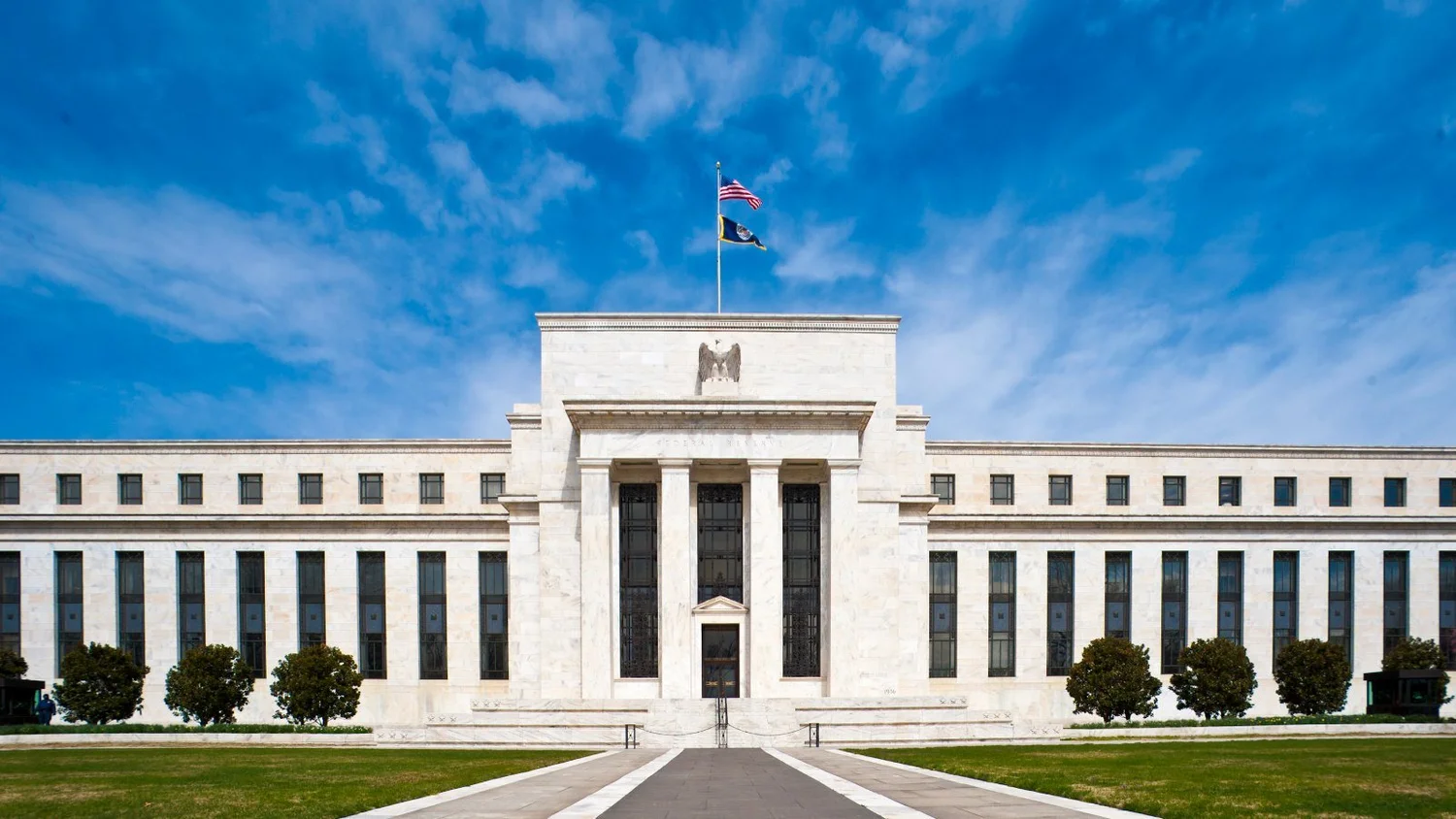
Photo: The Marriner S. Eccles Federal Reserve Board Building, Washington, D.C. Federal Reserve photo via Wikimedia Commons, public domain.