

After a drought that burned the lakebed, November's rains filled Lake Okeechobee so fast the Army Corps says it couldn't keep the gates shut.
By Joseph J. Jackson | ST. PETERSBURG (Nov. 23, 2026)
The short version
The Army Corps of Engineers opened the gates from Lake Okeechobee into the Caloosahatchee River overnight Saturday into Sunday.
Every hour, it's sending enough water down the river to bury a football field 81 feet deep, WGCU reports.
In July the lake had dropped below 11 feet after nearly two years of drought. This month's rains pushed it to nearly 15 feet.
Six months ago, the problem at Lake Okeechobee was too little water. The lakebed was dry enough to burn.
This weekend, the Army Corps opened the floodgates.
Why now?
At an unscheduled news conference Friday, the Corps said the rain was coming "too hard, too fast, and too steadily" to keep the gates closed much longer.
The Corps' daily report for Saturday, Nov. 21, put the lake at 14.85 feet, up from 14.55 a week earlier. More than 10,500 cubic feet of water per second were flowing into it. The lake had fallen below 11 feet in July after a drought that began in early 2025.
That's a swing of about 4 feet in four months, on a lake that covers about 730 square miles.
How much water is leaving?
WGCU's Tom Bayles reports the Corps is releasing enough water every hour to bury a football field under 81 feet. It flows west from Moore Haven toward Fort Myers and Cape Coral, then into the Gulf.
Why does the Gulf Coast worry?
A big rush of fresh lake water lowers the salinity in the Caloosahatchee estuary, which hurts the plants and animals that live there. Lake Okeechobee also carries heavy loads of nutrients and pesticides and has a history of algae blooms.
WGCU reports the volume is "pushing the ecological envelope," and environmental groups are watching the river's at-risk species.
Why not hold it in the lake?
The Herbert Hoover Dike. The Corps finished a $1.5 billion strengthening of the dike around the lake in early 2023, but high water still raises the risk to the people who live behind it. The Corps' job is to keep the lake below the level that puts the dike at risk, and the water has to go somewhere.
What happens next?
The Corps hasn't said how long the releases will last. FMNN will watch the Corps' daily reports and the river's salinity readings. If the St. Lucie River gets releases too, that goes on this story as an update.
Sources
WGCU, "Lake Okeechobee flood gates open into Caloosahatchee River" (Nov. 22, 2026): https://www.wgcu.org/top-story/2026-11-22/lake-okeechobee-flood-gates-open-into-caloosahatchee-river-after-lake-rises-due-to-heavy-rain-throughout-florida-this-month
U.S. Army Corps of Engineers, Jacksonville District, Lake Okeechobee daily status (Nov. 21, 2026): https://w3.saj.usace.army.mil/h2o/reports/StatusDaily.htm
CHNEP Water Atlas, Lake Okeechobee and Caloosahatchee release tracker (salinity, nutrients, dike): https://chnep.wateratlas.usf.edu/waterbodies/lakes/1002667/lake-okeechobee/release-levels-tracker
Lake Okeechobee News, lake rises 10 inches in a week (Nov. 3, 2026): https://lakeonews.com/stories/lake-okeechobee-level-rising,89139
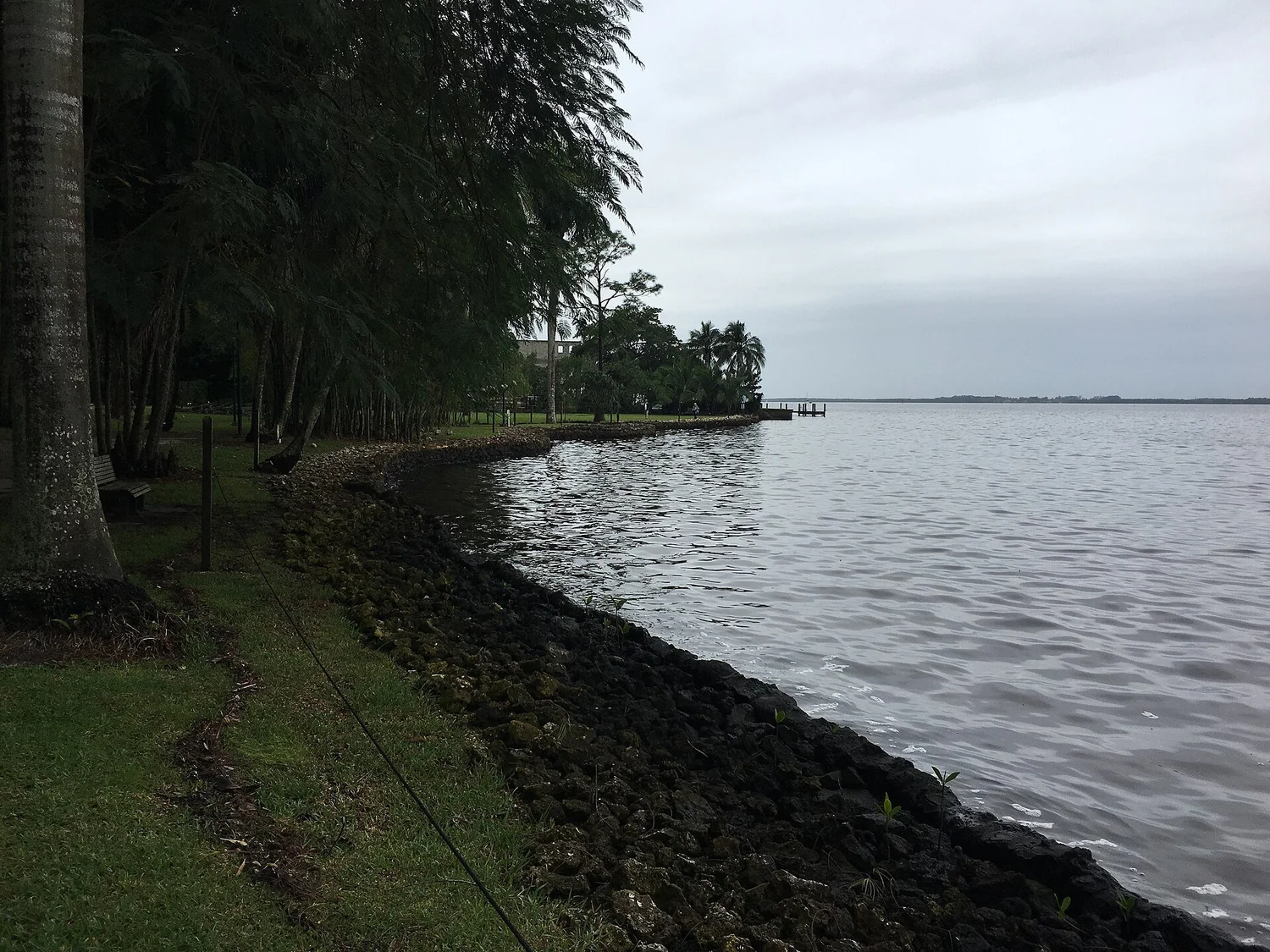
Photo: The Caloosahatchee River in Fort Myers. File photo. Fredlyfish4, CC BY-SA 4.0, via Wikimedia Commons.