
Nvidia put Jensen Huang back in charge Monday, 11 days after he quit over an affair with a woman U.S. officials suspect was working for Chinese intelligence. The investigation isn't finished. Florida, home to America's special operations command and a $102 billion defense economy, has more riding on the answers than most states.
By Joseph J. Jackson | ST. PETERSBURG (Nov. 23, 2026)
What happened Monday
Nvidia's board voted unanimously to reinstate Huang as president, CEO and board director, effective immediately. The board said it received "input from senior levels of the United States government" and is confident his return "poses no national security risk." President Trump had posted Sunday night that he hoped the board would rehire him.
Six days earlier, the board said it did not intend to bring Huang back.
The independent investigation into reports that Huang was targeted by a foreign intelligence effort will keep running. Nvidia is adding a national security and export control committee and a new chief compliance officer.
Why it's a national security story
The woman at the center of it, Alice Huang (no relation), was an executive at Megaspeed, a Singapore-based company described as Nvidia's largest customer in Southeast Asia. Reuters reported Megaspeed has bought more than $4.8 billion in advanced Nvidia chips since June 2024. U.S. officials are examining whether it helped move chips into China past export controls, and Singapore opened its own investigation. Megaspeed says the reports are "not supported by verifiable evidence" and that Alice Huang left the company in August 2025.
The Financial Times traced a web of companies connecting Nvidia to China-based chip users, including hundreds of shell companies. The New York Times, working with the intelligence firm Strider Technologies, traced about $3.6 billion in Chinese government funding through firms tied to Alice Huang's family and business partners, some linked to state-owned defense contractors. The Times said no evidence establishes that Nvidia chips ended up in Chinese military projects.
CNN found Chinese universities blacklisted for military ties reporting Nvidia chip purchases in recent months.
Last week, Trump met Xi Jinping in Shenzhen. Trump said Xi called Huang "brilliant." Treasury Secretary Scott Bessent said U.S. policy allowing sales of Nvidia's H200 chips to China is unchanged.
Why Florida should care
Defense is one of the biggest things Florida does. In 2022, $65.3 billion in direct defense spending supported more than 865,000 jobs and $102.6 billion in economic impact, 7.3% of the state's economy. Florida has 21 military installations.
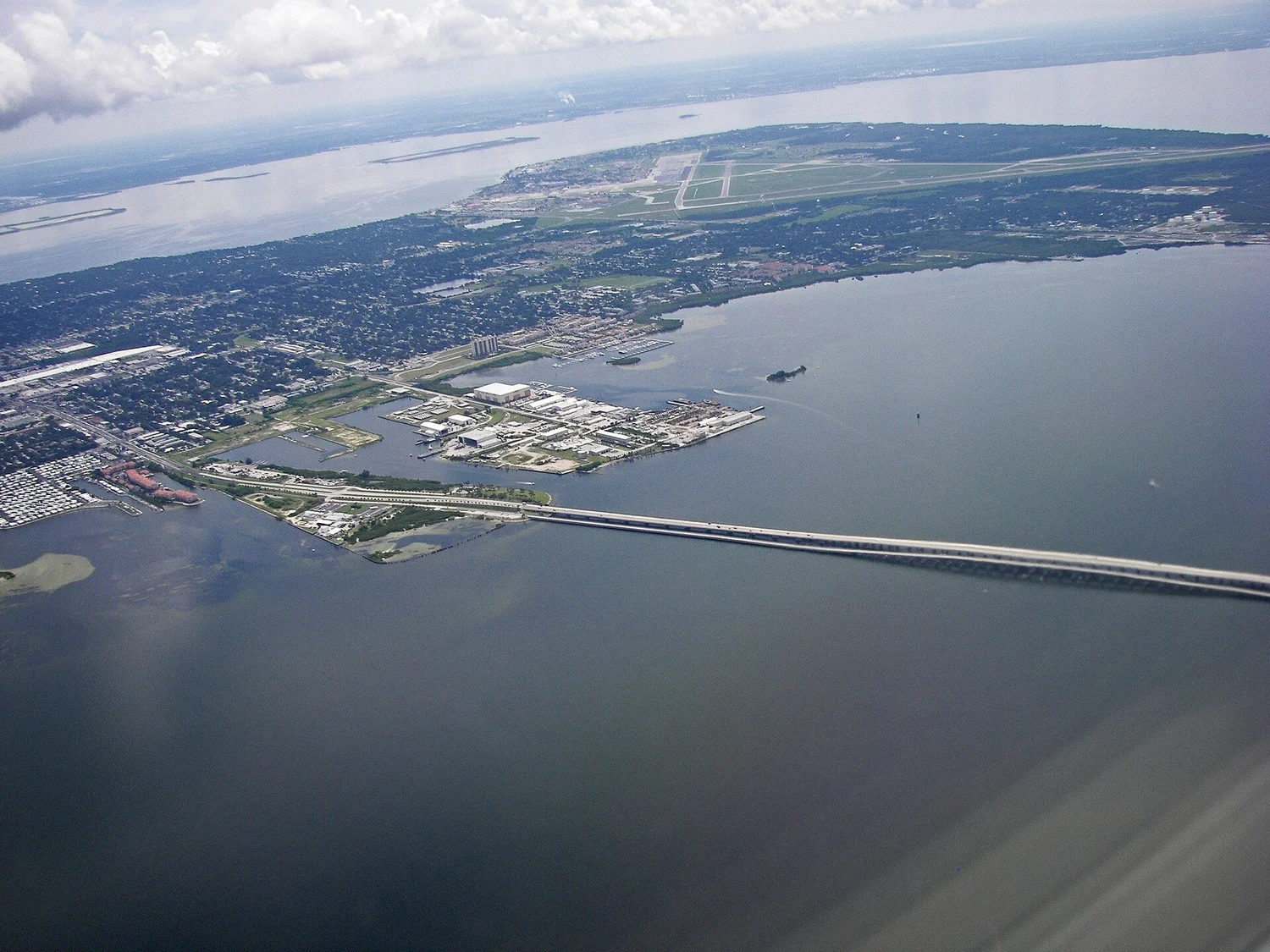
Tampa Bay. MacDill Air Force Base is home to U.S. Special Operations Command and U.S. Central Command. SOCOM activated a new Space Force component there on Nov. 2.
Jacksonville. Northeast Florida's military presence is worth $6.5 billion a year.
The Space Coast. L3Harris is headquartered in Melbourne. It builds AI-enabled systems with Palantir, including the Army's TITAN targeting node, and has tested AI drone detection with Shield AI.
Advanced AI runs on advanced chips. The question nobody has answered publicly: how much of Florida's defense work depends on Nvidia, and has anyone checked that supply chain since November?
Florida already has a chip-smuggling case
In November 2025, federal prosecutors in Tampa charged two Tampa men, along with men from Alabama and California, with smuggling Nvidia chips to China. Prosecutors say the group used a Tampa shell company called Janford Realtor LLC that never did any real estate business, plus fake paperwork and stops in Malaysia and Thailand. They allege the group moved 400 Nvidia A100 GPUs into China between October 2024 and January 2025. Homeland Security Investigations seized 50 Nvidia H200 GPUs in Tampa. The charges are allegations; FMNN could not confirm the case's current status.
Florida's man in the middle
Rep. Brian Mast, a Florida Republican, chairs the House Foreign Affairs Committee. After the scandal broke, he threatened to subpoena Huang, then said Huang had agreed to testify behind closed doors before Thanksgiving. Mast has fought Nvidia over China sales for most of the year: he wrote the AI Overwatch Act to let Congress block certain AI chip exports, and in January accused Nvidia of trying to sell advanced chips to Chinese military-linked firms.
Thanksgiving is Thursday. Huang now walks into that hearing as CEO again.
What we don't know
Whether any Florida base, command or contractor uses chips that passed through the Megaspeed network. Nothing reported so far says they do.
Whether the Pentagon has asked contractors to review their Nvidia supply chains.
What "input from senior levels of the United States government" the board received, and from whom.
What FMNN is asking
On Monday, FMNN sent these questions to L3Harris, public affairs at SOCOM and CENTCOM at MacDill, Navy Region Southeast in Jacksonville, and Nvidia, with a same-day deadline: Do your defense systems use Nvidia hardware? Have you reviewed that supply chain, or been asked to, since November? Has anything changed with Huang's return? Update, Nov. 23, 2026, evening: None had responded by Monday night. We'll update this story if they do.
Sources
NPR: Board said it did not intend to reinstate Huang (Nov. 17)
U.S. Attorney, Middle District of Florida: Arrests in AI chip export case
Bloomberg via Let's Data Science: Huang agrees to testify, Mast says
Photo: Aerial view of South Tampa with MacDill Air Force Base. Wknight94, CC BY-SA 3.0, via Wikimedia Commons.