
OPINION
The president says he "convinced" a private company's board to rehire its CEO. The stock added nearly $1 trillion in a day. He owns up to $62 million of it. Stop calling this a free market.
By Joseph J. Jackson | ST. PETERSBURG (Nov. 23, 2026)
The short version
Nvidia's board rehired Jensen Huang on Monday after "input from senior levels" of the government. President Trump says he "convinced" them.
Nvidia added nearly $1 trillion in value, the biggest one-day gain by any company on record. Trump held up to $62 million of the stock at the end of August.
The government already owns 9.9% of Intel and stakes in about 40 companies. I'm calling the system communcapitalism.
Today is the day the veil came off the U.S. economy.
On Monday morning, Nvidia's board unanimously rehired Jensen Huang. He resigned 11 days ago over an affair with a woman U.S. officials suspect was working for Chinese intelligence. The board's own filing says it "received input from senior levels of the United States government."
The president was less shy about it. "I spoke to them, let me put it that way," he told CNBC. "And I convinced them." His communications director, Steven Cheung, told Fortune that Trump was "totally involved."
Then the market spoke. Nvidia shares closed up about 31%, at $165.05. The company added about $952 billion in value in a single day, nearly $1 trillion. That is the biggest one-day gain by any company on record, and more than double the old one. The S&P 500 rose 4.7%, its best day since April 2025. Huang's own shares were worth about $33 billion more by lunch.
All of that turned on one man getting his job back. And he got it back because the president of the United States wanted him to have it.
What do you call this?
It isn't capitalism. In capitalism, a board answers to its shareholders. A CEO tied to an open FBI matter stays gone until he's cleared. The president finds out about it in the newspaper.
It isn't communism either. Nobody seized the factories. The profits are still private, and they are enormous.
It's something in between, and it needs its own name. I'm calling it communcapitalism: the state takes the control, the insiders keep the profits, and you carry the risk in your 401(k).
Did this start today?
No. Look at what Washington already holds:
Intel. The government bought 433.3 million shares for about $8.9 billion in August 2025. It is Intel's largest shareholder, with a 9.9% stake.
U.S. Steel. A "golden share" gives the government veto power over major company decisions.
MP Materials. The Pentagon took a 15% stake and became the largest shareholder in the rare earths miner.
About 40 companies in all, by a Cato Institute analyst's count. No agency publishes an official list. You own these stakes, and nobody will show you the portfolio.
Nvidia's China sales. The government owns no Nvidia stock. It takes a cut of the company's China chip revenue in exchange for export licenses.
The White House doesn't hide the ambition. Its top economic adviser, Kevin Hassett, called the stakes "like a down payment on a sovereign wealth fund."
Remember who's doing this. This is the party that spent forty years telling us government shouldn't pick winners and losers. It called a public option socialism. Now it picks the CEO.
Who owns the stock?
Here's the part that should make every investor in America sick. Donald Trump held between $13 million and $62 million in Nvidia stock at the end of August, according to the Washington Post's review of his disclosures. His filings lag by about two months, so nobody outside his circle knows what he holds today. If he still owns those shares, he made millions Monday off a decision he says he pushed for.
And look at the trading. His accounts have bought and sold Nvidia at least 103 times since he took office, CNBC found. They sold up to $1 million of it five days after Secretary of State Marco Rubio reportedly briefed him on Huang. Trump denies the briefing.
They sold up to $1 million more in August and kept buying anyway, straight through September. What they did in October and November, while the stock fell and he worked the board, is still secret.
The White House says independent managers run his portfolio. But a reporter asked whether Nvidia's stock slide factored into his push to bring Huang back. The president answered for himself: "Probably so."
A president who owns the stock leaned on the board, vouched for the CEO on national security ("we gave him assurance") and watched the price jump 32%. If a mayor in Florida did that with a city contractor, we'd call it what it is.
Is the investigation over?
No. The FBI matter is open. Nvidia's own review is open. Three House committees are still asking questions. Trump says Huang is "exonerated." No investigator has said so.
Even Republicans aren't buying it. "No national security risk? Based on what?" asked Sen. John Cornyn of Texas. Rep. Don Bacon of Nebraska said Huang "was compromised and exploited by a Chinese spy."
Their side
The administration's defenders have an argument, and it deserves a hearing. China subsidizes its chipmakers and miners, so America has to play the same game or lose. If taxpayers put up the money, taxpayers should share the upside. The Intel stake was worth about $42 billion by July, nearly five times what the government paid. And the Intel shares are passive: no board seat, and a promise to vote with management on most matters.
Fine. But Monday shows where that road goes. The government holds no Nvidia stock, no board seat and no vote. The president still decided who runs the most important company in the American economy. The control doesn't come from the shares. It comes from the export licenses, the contracts and the phone. A sovereign wealth fund has rules, audits and a public ledger. This has a president with a brokerage account.
What does it mean for you?
If your retirement is in an index fund, a big piece of it rides on Nvidia. This month you learned it can lose more than $2.5 trillion from its peak, then gain nearly $1 trillion back in a day, depending on who the president is rooting for.
That's the real cost of communcapitalism. Prices stop telling you what a company is worth and start telling you who's in favor. The people close enough to hear the phone ring will always trade ahead of you.
Congress should start with three things: the names of the officials who gave Nvidia's board its "input," the president's trading records for October and November, and a public list of every company the government owns a piece of.
Until then, don't let anybody tell you this is a free market. The veil is off.
This is an opinion column. For the news behind it, read Florida's $102 Billion Question.
Sources
Fortune: "I convinced" the board; "totally involved"; "Probably so"
CNBC interview with President Trump, Nov. 23 ("we gave him assurance")
The Independent: "exonerated" remark; Cornyn and Bacon statements
Benzinga: Nvidia up 32%, about $980 billion added, S&P 500 up 5%
24/7 Wall St. via Yahoo Finance: Huang's shares up about $33 billion
Axios via Yahoo Finance: more than $2.5 trillion lost from the peak
24/7 Wall St.: Washington a shareholder in 40 companies; Intel terms; Hassett remark
Fortune: no public ledger of stakes; Intel stake value and voting terms
Washington Post review of Trump's Nvidia stake (summary via Webull)
CNBC: 103 Nvidia trades; sale five days after reported briefing
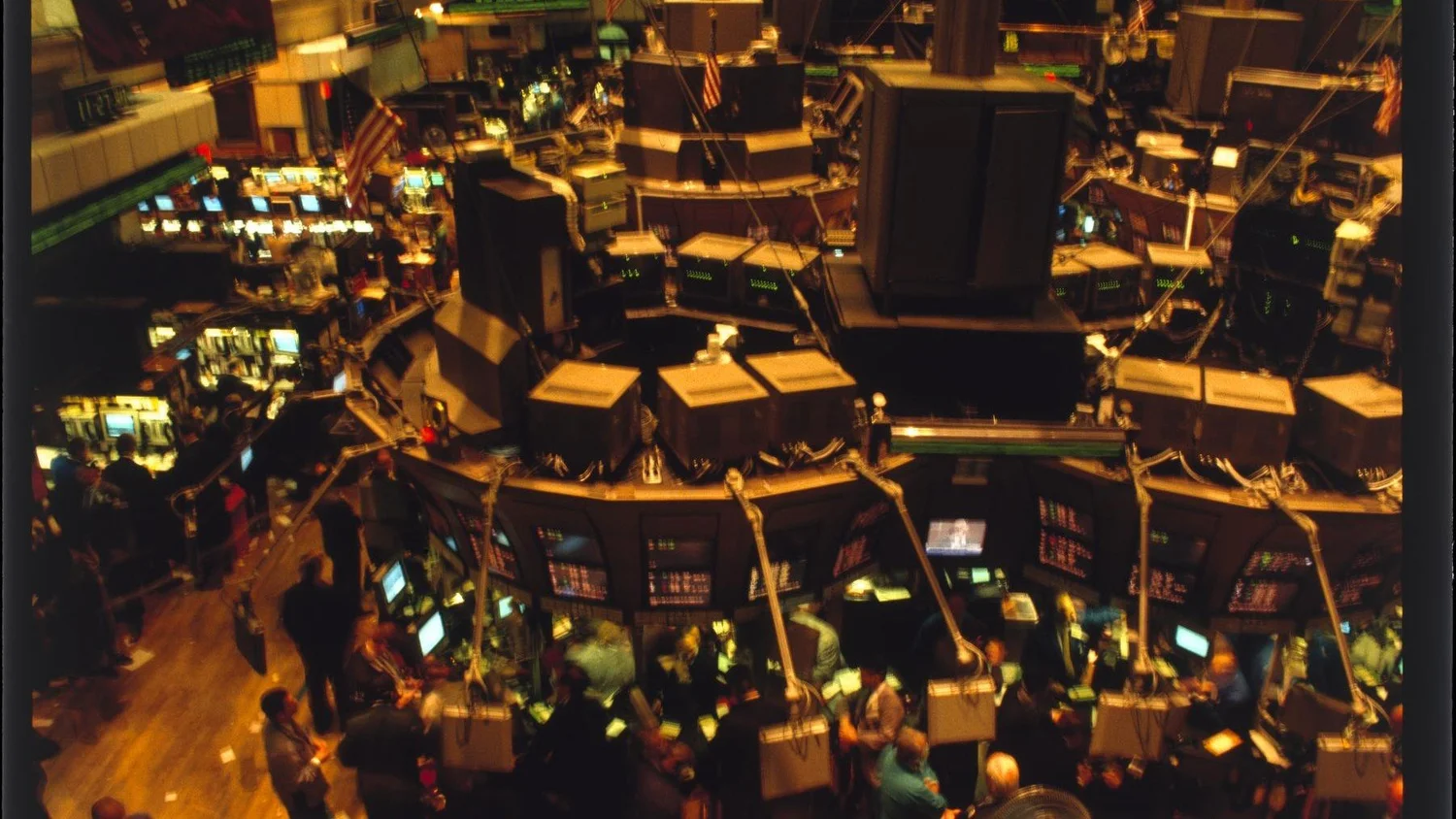
Photo: The trading floor of the New York Stock Exchange. Carol M. Highsmith, Library of Congress, public domain.