
Betrayal, Part 2: The Payoff
OPINION & ANALYSIS · BETRAYAL: THE PLAN ALL ALONG (2 of 4)
Russia attacked the 2016 election to help Trump. His campaign welcomed the help, its chairman shared polling data with a Russian intelligence officer, and then he spent two years trying to stop the investigation.
By Joseph J. Jackson, Founder of FMNN and author of The Death of the American Dream. Published October 18, 2026. Facts current as of October 17, 2026.
Disclosure: FMNN sells merchandise referencing Donald Trump. Our reporting follows the record regardless.
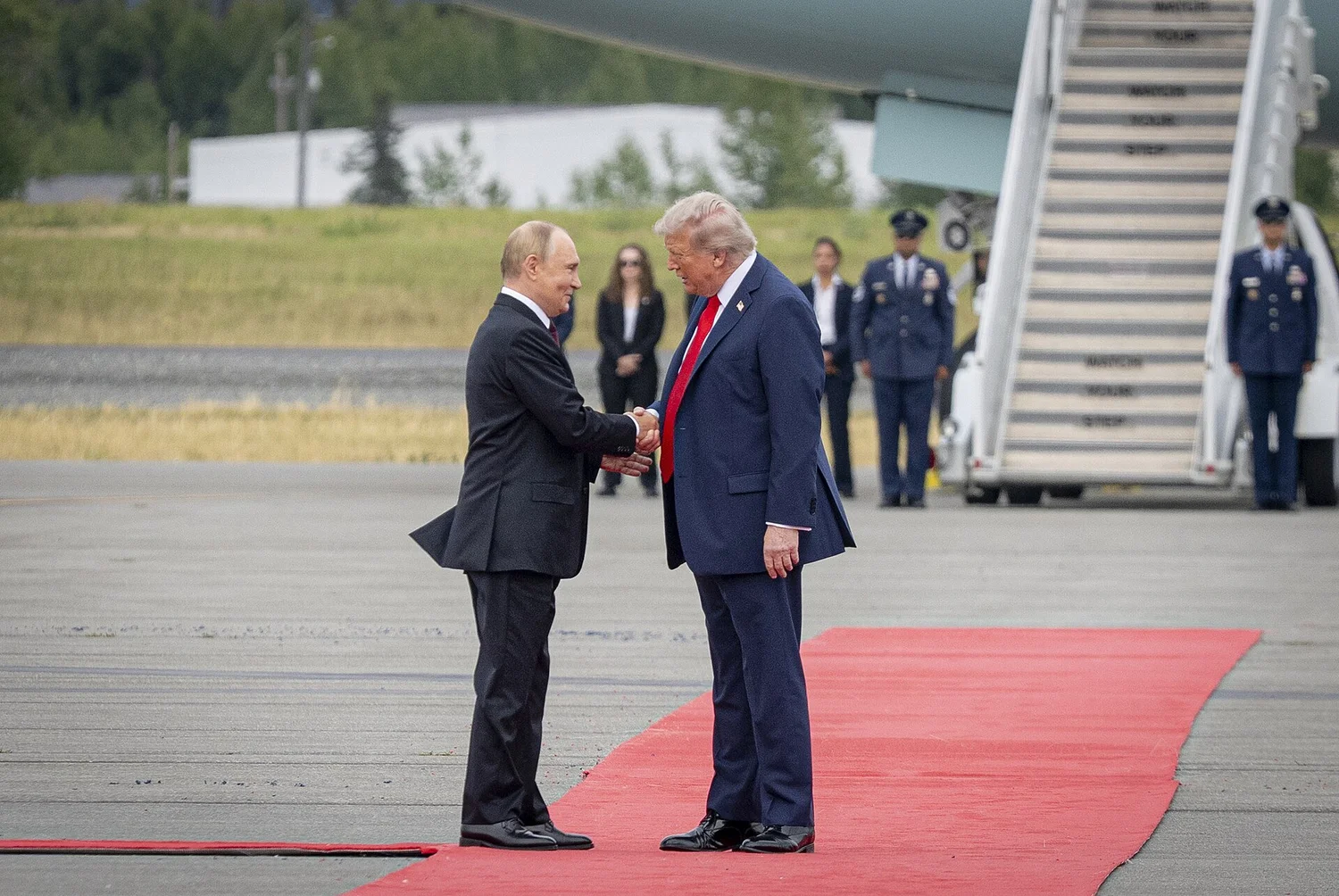
Five hours in July
On the morning of July 27, 2016, at a news conference at his Doral resort outside Miami, Donald Trump looked into the cameras and spoke to a foreign government. "Russia, if you're listening," he said, "I hope you're able to find the 30,000 emails that are missing."
According to the Mueller Report, within about five hours, officers of Russia's military intelligence agency, the GRU, made their first attempt to break into email accounts used by Hillary Clinton's personal office. They targeted 15 accounts. [1] Mueller reported the timing; he did not say the attempt was a response to Trump's words.
Trump later said he was joking. That morning in Doral is the hinge of this series: a candidate asking a hostile government for help in public, and that government's hackers moving the same day.
THE LEDGER
| Row | What the record shows | Label | Source |
|---|---|---|---|
| SAID | Trump, July 27, 2016: "Russia, if you're listening." His son, June 3, 2016, replying to an offer of Russian government dirt on Clinton: "if it's what you say I love it." | Documented, Tier 1 | Mueller Report, Vol. I, pp. 49, 110–123 [1] |
| DID | Campaign chairman Paul Manafort shared internal polling and campaign strategy with Konstantin Kilimnik. | Documented, Tier 2 | Mueller Report, Vol. I, p. 7; Senate Intelligence Committee, Vol. 5 [1][2] |
| RESULT | The Senate Intelligence Committee, then led by Republicans, called Kilimnik "a Russian intelligence officer" and Manafort's conduct "a grave counterintelligence threat." Treasury said in 2021 that Kilimnik passed the polling data to Russian intelligence services. | Documented, Tier 2 | SSCI Vol. 5 (2020); U.S. Treasury, Apr. 15, 2021 [2][3] |
| GAP | While Russia attacked the election, the campaign's chairman gave internal polling data to a man the Senate committee called a Russian intelligence officer. | Documented | [1][2][3] |
| KNEW | The June 2016 email to Trump Jr. described the offer as part of the Russian government's "support for Mr. Trump." He took the meeting. | Documented, Tier 1 | Mueller Report, Vol. I, pp. 110–123 [1] |
| SAID AFTER | Trump called the investigation a "hoax" and tried, in at least four episodes the special counsel documented, to limit or end it. | Documented, Tier 2 | Mueller Report, Vol. II [1] |
The email to Trump Jr. is Tier 1: the people offering the help said in writing that it came from the Russian government, and the campaign said yes to the meeting.
What you need to know
Special counsel Robert Mueller found that Russia interfered in 2016 "in sweeping and systematic fashion," through a social media campaign run by the Internet Research Agency and a hacking operation run by the GRU. He charged 34 people and three companies, including more than two dozen Russian nationals. [1][4]
Mueller did not establish that the Trump campaign conspired with Russia. He also wrote that lies, encrypted apps and deleted messages left gaps he could not fill. [1] On obstruction, he declined to decide whether Trump committed a crime, because Justice Department policy bars charging a sitting president. But he wrote that the report "does not exonerate him." [1]
Both halves of that matter. "Not established" is not "disproven." It is what happens when the witnesses lie and the evidence goes dark.
The meeting on the 25th floor
On June 3, 2016, Rob Goldstone, a publicist for the son of Moscow developer Aras Agalarov, the same family behind Trump's 2013 Moscow pageant, emailed Donald Trump Jr. Russia's top prosecutor, Goldstone wrote, had offered information that would incriminate Clinton. He called it part of Russia and its government's support for Trump. [1]
Trump Jr. answered within minutes: "if it's what you say I love it." On June 9, he, Jared Kushner and Manafort met Russian lawyer Natalia Veselnitskaya in Trump Tower. Mueller found the meeting produced little of use. [1]
The point is not what they got. It is what they were willing to take. A presidential campaign, told in writing that a hostile government wanted to help it win, said yes.
The polling data
Manafort ran the campaign that summer. He had spent a decade working for pro-Russian politicians in Ukraine, and his longtime aide in Kyiv was Konstantin Kilimnik.
Mueller found Manafort shared internal campaign polling data with Kilimnik and discussed a "peace plan" for Ukraine with him. [1] In August 2020, the Senate Intelligence Committee, led by acting chairman Marco Rubio, a Republican, went further. Its bipartisan report called Kilimnik "a Russian intelligence officer" and said Manafort's willingness to share information with him "represented a grave counterintelligence threat." The committee found some evidence that Kilimnik may have been connected to the GRU's hack-and-leak operation. [2]
In April 2021, the Treasury Department sanctioned Kilimnik and stated that he gave Russian intelligence "sensitive information on polling and campaign strategy." [3]
Rubio said the committee found no evidence of collusion. [2] FMNN reports his conclusion. We also report the facts his own committee found, and the reader can weigh both.
The firing
On May 9, 2017, Trump fired FBI Director James Comey. The next day, May 10, he hosted Russian Foreign Minister Sergey Lavrov and Ambassador Sergey Kislyak in the Oval Office. No American press was allowed in.
According to The New York Times, Trump told the Russians that firing Comey, whom he called a "nut job," had relieved "great pressure" on him. [5] According to The Washington Post, he also shared highly classified intelligence on the Islamic State that came from an allied country, later identified as Israel. [6]
Read that again. The day after firing the man investigating Russia's attack, the president told Russia's diplomats he felt relief, and handed them an ally's secrets.
The ten episodes
Mueller's second volume examined ten episodes of possible obstruction. Former federal prosecutors, more than 1,000 of them from both parties, signed a statement saying the conduct would "result in multiple felony charges" for anyone other than a president. [7]
Here they are, with what each one protected. Every one shielded an investigation into a foreign attack on an American election.
| # | Episode | What Mueller found | What it shielded |
|---|---|---|---|
| 1 | Asking Comey to let the Flynn investigation go | Substantial evidence Trump made the request; intent unclear | The inquiry into his national security adviser's secret talks with the Russian ambassador |
| 2 | Pressing intelligence chiefs to publicly clear him | Evidence did not establish intent | Public confidence in the Russia inquiry |
| 3 | Firing Comey | Substantial evidence the firing was tied to the Russia inquiry | The FBI's Russia investigation itself |
| 4 | Ordering White House counsel Don McGahn to have Mueller removed | Substantial evidence on act, connection and intent | The special counsel investigating Russia |
| 5 | Sending Corey Lewandowski to tell Attorney General Jeff Sessions to limit Mueller to future elections | Substantial evidence of intent | The investigation of 2016 |
| 6 | Hiding the June 9 meeting emails | Evidence did not establish obstruction | The public's knowledge of the Russian offer |
| 7 | Urging Sessions to take back control of the probe | Evidence of intent to restrict it | The special counsel's independence |
| 8 | Ordering McGahn to deny he'd been told to fire Mueller | Substantial evidence of intent | The record of episode 4 |
| 9 | Dangling support for Manafort, the man who handed over the polling data | Evidence suggests intent to discourage his cooperation | A key witness to what Kilimnik got |
| 10 | Praising, then attacking, Michael Cohen | Evidence could support an inference he sought to influence Cohen | The Moscow tower witness |
(Episodes, page ranges and findings from Mueller Report Vol. II, pp. 24–156, as analyzed by Lawfare. [1][8] Mueller did not say any episode met every element of a crime; that judgment belongs to the prosecutors' statement and to commentators.)
How close does this come to treason? Legally, not close: treason requires a nation at war with us, and Part 4 explains why. Morally, closer than any president has come. Obstructing a bribery case protects a crook. Obstructing an investigation into a foreign government's attack on an election protects the attacker. Episode 9 is the sharpest. The campaign chairman who gave internal polling data to a man Treasury says passed it to Russian intelligence was the man Trump signaled he might pardon. In December 2020, he did. [9]
Helsinki
On July 16, 2018, Trump stood beside Vladimir Putin in Helsinki. Asked whether he believed his own intelligence agencies or Putin about 2016, he called Putin's denial "extremely strong and powerful." He said he didn't see why Russia would have done it. The next day he said he had meant "wouldn't." [10]
His own director of national intelligence, Dan Coats, a former Republican senator, issued a statement that same day standing by the assessment of Russian meddling. [10]
Months later, The Washington Post reported that after an earlier meeting with Putin in Hamburg, Trump took his interpreter's notes and told the interpreter not to discuss the conversation. The White House disputed the account. [11] There is no detailed U.S. government record of several of Trump's private conversations with Putin. The American people do not know what their president said to Russia's.
Ukraine, 2019
On July 25, 2019, Trump called Ukraine's new president, Volodymyr Zelenskyy, and asked for "a favor." He wanted investigations of Joe Biden and of a debunked theory that Ukraine, not Russia, interfered in 2016. At the time, his administration was holding back $391 million in military aid that Congress had approved for Ukraine to fight Russia. [12]
The Government Accountability Office ruled in January 2020 that the hold broke the law. [13] The House impeached Trump for abuse of power and obstruction of Congress. The Senate acquitted him, 52–48 and 53–47. Sen. Mitt Romney was the only Republican who voted to convict. [14]
The theory Trump wanted Ukraine to chase, that Kyiv rather than Moscow attacked 2016, came from Russia. His own former Russia adviser told Congress so under oath. (See Voices of Resistance below.)
Reality of the Situation
The White House did not respond to a request for comment sent Oct. 17, 2026, with a 4 p.m. ET deadline. FMNN will add any response it receives.
What his defenders say: Mueller found "no collusion." The Senate found no collusion. It was a witch hunt, and Trump cooperated.
What the record says:
- "No collusion." Mueller did not use the word; it is not a legal term. He found the evidence did not establish a criminal conspiracy, and he wrote that lies and destroyed evidence limited what he could find. [1]
- "Total exoneration." False. The report says in plain words that it does not exonerate him. [1]
- "Trump cooperated." Partly false. He refused to sit for an interview and gave only written answers. His written answers, the Senate committee later found, conflicted with evidence that he discussed WikiLeaks with Roger Stone. [2]
- "It was a witch hunt." Mueller's work produced guilty pleas or convictions of Trump's campaign chairman, deputy campaign chairman, national security adviser, personal lawyer and a foreign policy adviser. Trump pardoned or commuted several of them, including Manafort, Stone and Flynn. [4][9]
- "Ukraine interfered, not Russia." False. U.S. intelligence, the Mueller Report and the Republican-led Senate committee all found Russia attacked the 2016 election. [1][2]
Voices of Resistance
On Nov. 21, 2019, Fiona Hill, Trump's former top Russia adviser on the National Security Council, told the House Intelligence Committee that the claim Ukraine interfered in 2016 was a fiction spread by Russia's security services. She warned Republicans on the panel that by repeating it, they were helping Moscow. [15]
Lt. Col. Alexander Vindman, who heard the July 25 call and reported it, testified too. Two days after the Senate acquitted Trump, Vindman was walked out of the White House. His twin brother, also a White House lawyer, was removed the same day. Vindman retired from the Army that July. [16]
Reading the Pattern
The official story. "No collusion" became the slogan; the report it summarized said Trump was not exonerated and that lies kept investigators from the full truth.
Accountability delayed and partial. The campaign chairman who gave a Russian intelligence officer the polling data was convicted, then pardoned by the man he worked for.
Who Carried the Story
The Washington Post, owned by Jeff Bezos, and The New York Times broke the Oval Office story in May 2017. The New York Times first reported the June 9 meeting. The Senate Intelligence Committee's 966-page bipartisan report, released in August 2020, drew far less coverage than the Mueller Report, landing during the pandemic and the presidential campaign.
Closing
Doral is still a Trump resort. Golfers tee off a few hundred yards from where he asked Russia to find Hillary Clinton's emails. Within five hours, the GRU tried.
That morning has been called a joke for ten years. But in the months that followed, the campaign took the meeting, shared the polling, hid the emails and fired the investigator. A joke does not need that much cover.
Sources
- Special Counsel Robert S. Mueller III, Report on the Investigation into Russian Interference in the 2016 Presidential Election, Vol. I pp. 1–10, 49, 110–141; Vol. II pp. 1–8, 24–182 (March 2019) — justice.gov
- U.S. Senate Select Committee on Intelligence, Russian Active Measures Campaigns and Interference in the 2016 U.S. Election, Volume 5: Counterintelligence Threats and Vulnerabilities, S. Rpt. 116-290, Aug. 18, 2020 — intelligence.senate.gov
- U.S. Department of the Treasury, press release JY0126, Apr. 15, 2021 — treasury.gov
- NBC News, tally of special counsel defendants (34 individuals, 3 companies).
- Matt Apuzzo, Maggie Haberman and Matthew Rosenberg, "Trump Told Russians That Firing 'Nut Job' Comey Eased Pressure From Investigation," The New York Times, May 19, 2017.
- Greg Miller and Greg Jaffe, "Trump revealed highly classified information to Russian foreign minister and ambassador," The Washington Post, May 15, 2017.
- "Statement by Former Federal Prosecutors," Protect Democracy, May 6, 2019 — protectdemocracy.org
- Lawfare, "Obstruction of Justice in the Mueller Report: A Heat Map" — lawfaremedia.org
- White House pardon announcements, Dec. 23, 2020 (Manafort, Stone); Nov. 25, 2020 (Flynn).
- Military Times / AP, "US intel chief stands by assessment of Russian meddling," July 16, 2018 — militarytimes.com
- Greg Miller, "Trump has concealed details of his face-to-face encounters with Putin from senior officials in administration," The Washington Post, Jan. 12, 2019.
- White House, Memorandum of Telephone Conversation, July 25, 2019 (declassified Sept. 24, 2019).
- U.S. Government Accountability Office, Decision B-331564, Jan. 16, 2020 — gao.gov
- U.S. Senate roll call votes, Feb. 5, 2020; JURIST — jurist.org
- House Permanent Select Committee on Intelligence, public hearing testimony of Dr. Fiona Hill, Nov. 21, 2019.
- Reporting on Lt. Col. Alexander Vindman's removal, Feb. 7, 2020, and retirement, July 2020 (AP; The Washington Post).
Updates and corrections
No corrections as of publication.
FMNN takes no advertising or investor money. Our reporting is funded by merchandise and book sales. Learn how we're funded